For local gearheads, weekend track warriors, and project car builders (the Who), custom exhaust fabrication (the What) is the specialized art of measuring, cutting, bending, and welding an exhaust system built entirely from scratch for your specific vehicle. We aren’t talking about buying a bolt-on kit online; we are talking about bespoke metalwork tailored to your exact engine setup.
So, Why go through the trouble? Because factory exhausts are built with one thing in mind: mass-market compromise. They are made to be whisper-quiet, cheap to produce, and strictly compliant with standard emissions, which means they heavily restrict airflow. By turning to custom fabrication—which includes everything from precise mandrel bends to high-end custom header fabrication—you eliminate these factory bottlenecks. The result? Better exhaust gas scavenging, noticeable gains in horsepower and torque, and a signature sound that turns heads. Whether you need an aggressive setup for Sepang or specialist exhaust repairs for a rusty daily driver, a custom exhaust is the ultimate way to breathe life into your engine.
Key Takeaways
- Say Goodbye to Bottlenecks: A proper custom exhaust uses mandrel bends to ensure your engine expels gas smoothly, boosting both horsepower and low-end torque.
- Sound Control: Custom fabrication lets you dictate the volume and tone. Want a deep rumble without the annoying highway drone? A good fabricator can tune it perfectly.
- Fight the Humid Climate: Upgrading to 304 stainless steel is crucial in Malaysia. It fights off rust caused by our high humidity and inevitable flash floods much better than factory mild steel.
- The Engine Swap Solution: If you’re dropping a K-series engine into an older chassis, off-the-shelf parts won’t fit. Custom fabrication is the only way to link your new engine to the back bumper.
- Quality Over Everything: True fabrication relies heavily on beautiful TIG welding and mathematical flow dynamics, not just “agak-agak” (guessing) pipe sizes.
What is Custom Exhaust Fabrication?
Let’s get straight to facts: custom exhaust fabrication is where automotive engineering meets metalworking artistry. It involves constructing the entire exhaust pathway under your car piece by piece.
When you ask a pro to build an exhaust, they are evaluating your engine’s displacement, checking your ground clearance, and asking about your power goals. They are building a breathing apparatus for your engine. If you want to see what professional-grade local fabrication looks like, you can check out specialists like [https://tongyinnmetal.com.my/custom-exhaust-system/].
The Anatomy of Your Exhaust System
To appreciate the work your mechanic is doing, you need to know the basic plumbing:
- Manifold/Headers: The heavy breather right at the engine block. This collects gases directly from the cylinders.
- Catalytic Converter (Cat): The eco-filter. It scrubs harmful toxins before they hit the air.
- Resonator: The sound-shaper. It cancels out those high-pitched, annoying frequencies that cause a headache during long traffic jams on the LDP.
- Muffler: The volume knob. This dictates how loud your car actually is.
- Piping: The veins of the system, measured carefully by diameter.
- Tips: The shiny bits at the bumper that everyone sees.
Why Invest in a Custom Exhaust?
Why drop a few thousand Ringgit on a custom setup instead of buying a universal muffler online? It boils down to three big wins: performance, acoustics, and fitment.
Unlocking Performance and Efficiency
Think of your engine like a runner. If you make a runner breathe through a straw, they’ll gas out immediately. Stock exhausts are often that straw. Manufacturers use “crush bends” to save money, which shrinks the pipe diameter at every turn. This creates backpressure—meaning your engine has to fight just to push waste out.
A well-calculated custom setup fixes this. A seasoned fabricator will calculate the optimal pipe size. Too small, and the engine chokes. Too large, and the exhaust gases slow down, killing your low-end torque (making the car feel sluggish when you take off at a traffic light). The sweet spot promotes “scavenging,” where the exiting exhaust pulses literally suck the next batch of air out of the engine, making it hyper-efficient.
Tuning That Perfect Exhaust Note
Let’s be real—half the reason we change our exhausts is for the sound. But there’s a fine line between a beautiful, aggressive tone and sounding like an angry mosquito at 3 AM.
Custom fabrication puts you in the driver’s seat for sound design. By choosing specific resonators and testing different muffler designs (like straight-through vs. chambered), the fabricator can kill the dreaded “cabin drone” while ensuring the car screams beautifully when you step on the pedal.
Clearance for Lowered and Lifted Rides
If you are running a lowered stance setup, a stock exhaust is going to scrape on every single speed bump in the country. A custom fabricator can route the pipes closer to the chassis, tucking everything safely away. Conversely, if you’re building a 4×4 for jungle trails, they can route the exhaust to keep it safe from rocks and deep water crossings.
The Fabrication Process: From Raw Pipe to Masterpiece
Building an exhaust is serious, highly skilled labor. Here is what happens behind the garage doors.
Material Selection: Beating the Malaysian Weather
Our weather is brutal on metal. High humidity, heavy rain, and scorching heat mean cheap materials don’t stand a chance.
- Mild/Aluminized Steel: Cheap, but it will rust. Fast. One monsoon season and you’ll be dealing with holes.
- 409 Stainless Steel: Often used by car manufacturers. It’s decent, but it still develops surface rust and looks a bit ugly over time.
- 304 Stainless Steel: This is the local sweet spot for premium builds. It has high chromium and nickel content, meaning it fights off rust incredibly well and turns a gorgeous golden-blue hue when exposed to heat.
- Titanium: Super lightweight and creates a very exotic, raspy sound. It’s amazing for track cars but comes with a massive price tag because it is very difficult to weld.
Pipe Bending: Mandrel vs. Crush Bending
If a shop tells you they’ll bend the pipe for cheap, ask them how.
- Crush Bending: The pipe is shoved into a machine and bent. The inside of the curve crinkles and collapses, choking airflow by up to 30%. Avoid this.
- Mandrel Bending: A solid steel ball (the mandrel) is pulled through the inside of the pipe as it bends. The pipe stays perfectly round, keeping a 100% consistent diameter. This is mandatory for real performance.
Custom Header Fabrication
If you really want to chase horsepower, custom header fabrication is where the magic happens. Factory cast-iron manifolds are heavy, restrictive blocks of metal.
Building custom headers is pure math and metalwork. The fabricator aims for “equal length” primary tubes. This means the pipe coming from cylinder 1 is exactly the same length as the pipe from cylinder 4. When the exhaust gases reach the collector (where they all meet), they arrive in perfect sequence—1, 2, 3, 4—instead of crashing into each other. This smooth flow dramatically boosts power, especially at higher RPMs. It takes serious skill to make this fit inside a cramped engine bay.
The Art of Precision Welding
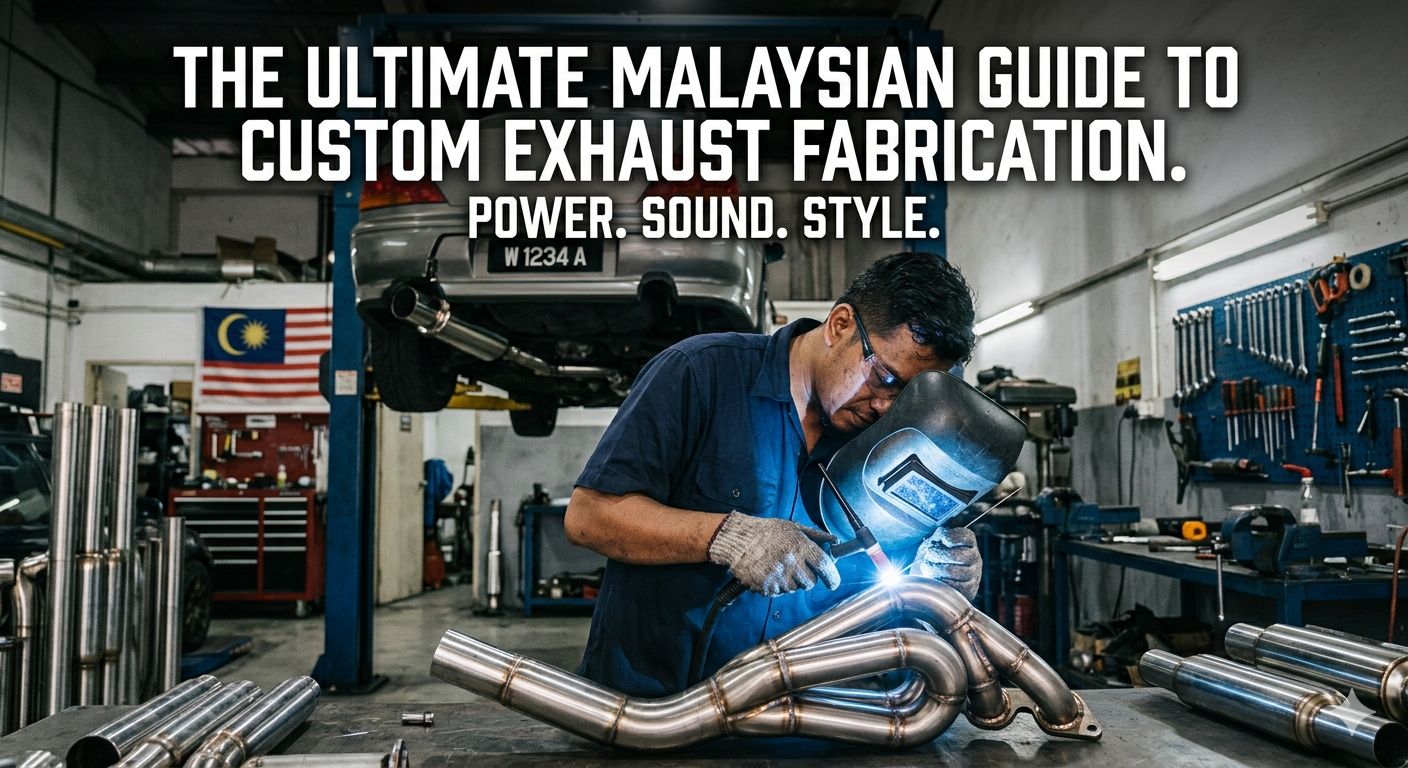
A custom exhaust is only as good as its welds. MIG welding is fast and okay for brackets, but TIG (Tungsten Inert Gas) welding is the benchmark for high-end exhaust systems.
TIG welding looks like a neat stack of coins (the famous “stack of dimes”). For materials like 304 stainless, a true pro will use a technique called “back purging.” They fill the inside of the pipe with Argon gas while welding the outside. This stops the inside from oxidizing and turning into a jagged, turbulent mess that restricts airflow. To see examples of premium, high-quality TIG work, take a look at [https://tongyinnmetal.com.my/custom-exhaust-system/].
When Do You Actually Need Custom Work?
Off-the-shelf parts are great for standard cars, but there are times when only custom will do.
Engine Swaps and JDM Half-Cuts
Malaysia’s car culture is heavily driven by engine swaps. If you are shoehorning a modern turbo engine into a classic chassis, there is no catalog in the world with a ready-made exhaust for you. The custom fabricator has to snake the piping around custom engine mounts, new steering columns, and tight firewalls without burning up your fuel lines.
Specialist Exhaust Repairs
Sometimes you don’t need a whole new system. If you drive an older car, rust or a bad hit from a pothole might have destroyed a section of your piping. Specialist exhaust repairs involve a fabricator cutting out the cancer, fabricating a perfect matching patch from high-grade stainless steel, and welding it seamlessly. They also replace worn-out flex pipes (the braided metal part that prevents engine vibrations from snapping your exhaust) and burnt-out catalytic converters.
Navigating Custom Exhaust Malaysia
When you are looking for custom exhaust malaysia solutions, local context matters. A good local shop knows exactly what the JPJ (Road Transport Department) looks for regarding noise levels and emissions. They understand the trends, like the popularity of valvetronic exhausts (where you can push a button on a remote to open a valve and make the car loud, then close it to keep quiet when entering your neighborhood). For top-tier local expertise and builds that survive the Malaysian roads, you can check out [https://tongyinnmetal.com.my/custom-exhaust-system/].
Choosing the Right Fabricator (No Ah Beng Shops)
Don’t just hand your car keys to the first shop with a welding torch. Look for these signs of a professional:
- Ask to see their work: Look for clean, colorful TIG welds and perfectly round mandrel bends.
- Talk materials: Make sure they use 304 Stainless Steel for longevity.
- Gauge their knowledge: They should be asking about your engine specs, transmission type, and power goals before they even suggest a pipe size.
- Hardware matters: High-end shops use V-band clamps to join exhaust sections, not cheap U-bolts. V-bands don’t leak and make it super easy to remove the exhaust if you need to service your car later.
Frequently Asked Questions (FAQ)
- Will JPJ or PUSPAKOM kacau (bother) me if I change my exhaust? It depends on what you do. Modifying the piping after the catalytic converter (a “cat-back” system) is generally tolerated as long as you do not exceed the legal decibel (dB) limits set by JPJ and the Department of Environment (JAS). However, removing your catalytic converter entirely (a “straight pipe” setup) is technically illegal, bad for the environment, and will fail a PUSPAKOM inspection.
- How much horsepower can I actually gain? If you drive a standard naturally aspirated 1.5L car, a custom exhaust might only give you an extra 3 to 8 horsepower—mostly, you are paying for the better sound and look. But if you drive a turbocharged car, or you’re doing a full system with custom header fabrication on a large engine, the factory exhaust was likely holding you back immensely. In those cases, gains of 15 to 40+ horsepower are very possible with a proper ECU tune to match.
- What is the difference between an Axle-Back and a Cat-Back exhaust? An “Axle-Back” only replaces the rear muffler and exhaust tips (everything behind the rear axle). It changes how the car looks and sounds, but offers almost zero performance gains. A “Cat-Back” replaces the mid-pipe, resonator, and muffler (everything after the catalytic converter). This opens up the exhaust flow significantly and is the best balance of sound and performance.
- I heard engines need backpressure to run right. Is that true? This is the most common myth in the car world! Engines do not need backpressure. Backpressure is just resistance, and resistance makes the engine work harder. What engines actually need is exhaust gas velocity (speed). If an exhaust pipe is way too big, the gases slow down, and you lose low-end power. People confuse this loss of velocity with a “lack of backpressure.” A professional fabricator chooses the perfect pipe diameter to keep velocity high and backpressure as low as possible.
- How long will my car be in the workshop? If you are just changing the rear muffler and tips, you can wait at the mamak next door—it takes maybe 2 to 3 hours. But if you are commissioning a full bumper-to-engine custom stainless steel system with intricate TIG welding and custom headers, expect to leave your car at the shop for 3 to 7 days. Perfection takes time.