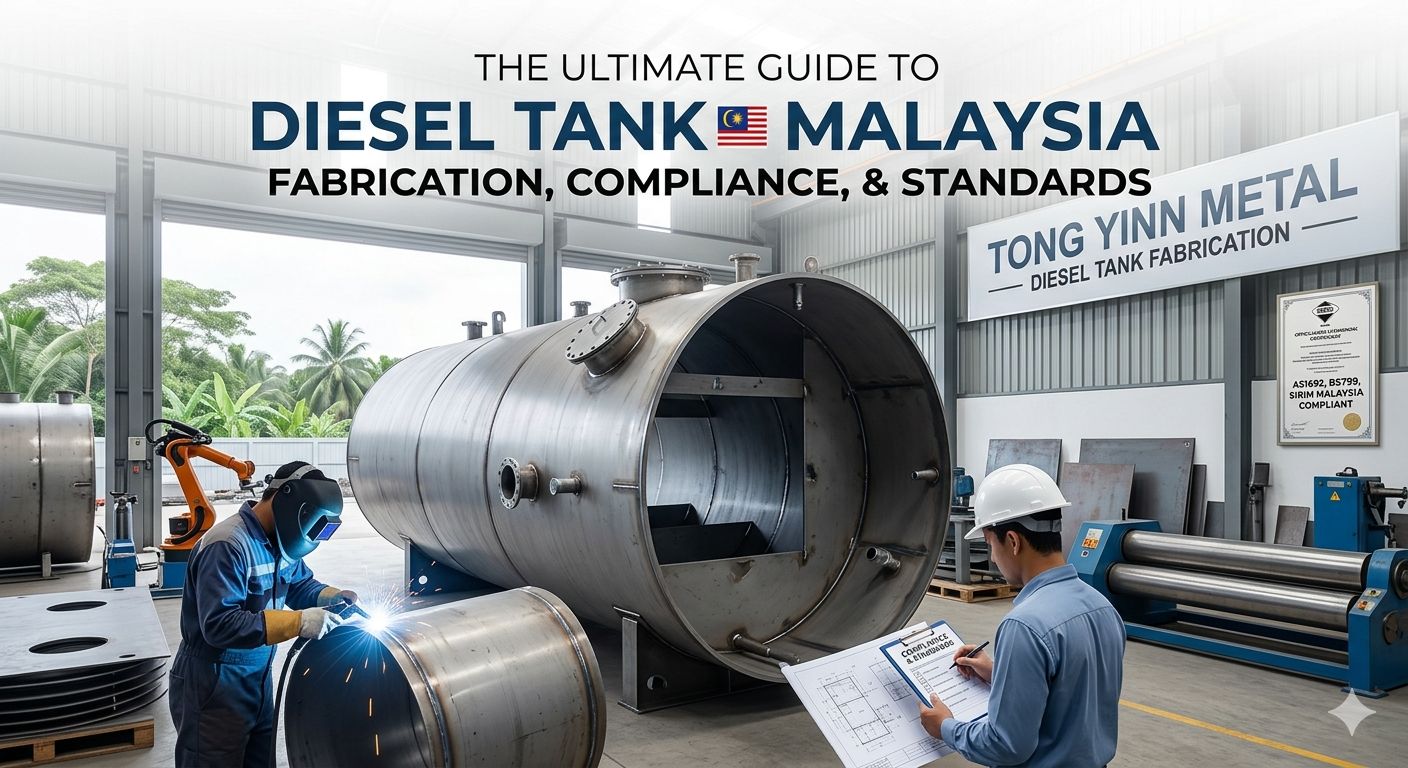
For fleet managers, construction site supervisors, and industrial plant engineers (the Who), a diesel tank in Malaysia (the What) is much more than a simple storage vessel; it is the lifeline of their daily operations. Whether it is a bulk storage skid tank for a remote project site or a vehicle-mounted fuel reservoir for long-haul logistics, these tanks ensure energy security and operational continuity.
But Why is specialized knowledge essential? In Malaysia, diesel storage and transport are governed by strict safety regulations and environmental standards. Using substandard containers leads to fuel contamination, expensive engine failures, and severe legal penalties from authorities like JPJ (Jabatan Pengangkutan Jalan). From navigating the complexities of r34 tanks for commercial vehicles to understanding the nuances of tank fabrication in Malaysia, choosing the right equipment is critical. This guide provides an authoritative look at how to source, maintain, and certify custom fuel tanks that meet Malaysian industrial demands.
Key Takeaways
- Compliance is Non-Negotiable: For road-going vehicles, adhering to UN ECE R34 (R34 tanks) standards is vital for fire safety and legal road worthiness in Malaysia.
- Material Integrity: Most high-quality diesel tank Malaysia fabricators prioritize 304 stainless steel or high-grade mild steel with internal epoxy coatings to prevent corrosion.
- Precision Engineering: Tank fabrication in Malaysia has evolved to include advanced CNC cutting and automated welding to ensure zero-leakage performance under extreme tropical heat.
- Customization Trends: Custom fuel tanks are increasingly sought after to maximize space efficiency in modern truck chassis and industrial generator sets (Gensets).
- Maintenance Priority: Regular hydrostatic testing and sediment drainage are essential to prevent diesel bug (microbial growth) which is common in Malaysia’s humid climate.
Understanding the Diesel Tank Landscape in Malaysia
The demand for diesel storage in Malaysia spans multiple high-growth sectors. As the country continues its infrastructure expansion, the need for reliable, high-capacity fuel storage has never been greater.
Industrial and Construction Storage
On construction sites across the Klang Valley and East Malaysia, portable storage units are the standard. These are horizontal tanks often mounted on a steel frame for easy relocation. They provide the necessary fuel for excavators, cranes, and backhoes.
Power Generation (Gensets)
With Malaysia’s manufacturing sector booming, many factories maintain large-scale diesel generators as a backup for the national grid. These require specialized “day tanks” and bulk storage systems designed to feed the generator automatically during power outages. For high-performance storage solutions, explore [Custom Diesel Fuel Tanks | R34-Compliant Heavy-Duty Fabrication].
The Critical Role of R34 Tanks in Road Transport
In the logistics industry, the term r34 tanks is a hallmark of safety. It refers to the UN ECE Regulation No. 34, which sets the uniform provisions concerning the approval of vehicles with regard to the prevention of fire risks.
What is the R34 Standard?
The R34 standard specifically addresses the fuel tank’s ability to withstand impacts and prevent leaks during accidents. In Malaysia, JPJ requires that fuel tanks on commercial vehicles meet these stringent international standards to minimize the risk of explosion or fire during road mishaps.
A certified R34 tank must undergo:
- Overpressure Tests: Ensuring the tank does not rupture under internal stress.
- Overturn Tests: Proving the tank remains sealed even if the vehicle flips.
- Impact Resistance: Validating that the material can absorb energy without catastrophic failure.
Why Compliance is Mandatory for Logistics
Malaysian logistics companies operating cross-border routes or heavy-duty hauling cannot afford the downtime associated with non-compliant equipment. Using a non-certified diesel tank in Malaysia can result in vehicle impoundment and the voiding of insurance policies. Ensuring your fleet is equipped with [Custom Diesel Fuel Tanks | R34-Compliant Heavy-Duty Fabrication] is a strategic business decision.
Professional Tank Fabrication in Malaysia
The quality of a diesel tank is determined long before it is filled with fuel. It starts in the fabrication yard.
The Engineering Process
Modern tank fabrication in Malaysia utilizes Computer-Aided Design (CAD) to ensure every weld and baffle is perfectly placed. Baffles are internal walls within the tank that prevent “sloshing.” In a moving truck, the momentum of several hundred liters of diesel shifting can cause handling instability; precision-engineered baffles neutralize this force.
Material Science: Choosing the Right Metal
- Mild Steel: The most common choice for large-scale industrial storage. It is cost-effective and strong. However, in Malaysia’s humidity, these tanks must be sandblasted and coated with high-quality epoxy to prevent internal rust.
- Stainless Steel (304/316): Often used for custom fuel tanks in marine environments or specialized industrial use. It offers superior corrosion resistance but at a higher price point.
- Aluminum: Preferred for vehicle-mounted tanks due to its light weight, which helps in maintaining better fuel economy for the truck.
Custom Fuel Tanks: Tailored Solutions for Industry
Standard off-the-shelf tanks rarely meet the specific needs of modern industrial applications. This is where the demand for custom fuel tanks comes in.
Genset and Industrial Storage
Customization allows for the integration of digital fuel monitoring systems, high-flow pumps, and filtration units directly onto the tank structure. In high-stakes environments like data centers, these tanks are often built with “double walls” (bunded) to ensure that if the primary tank leaks, the secondary outer shell catches the spill, preventing environmental contamination.
Marine and Agricultural Applications
In the marine sector, tanks must be shaped to fit the unique hull contours of fishing vessels or transport boats. Similarly, in the palm oil industry, diesel tank Malaysia providers often create specialized “trolley tanks” that can be towed through plantations to refuel tractors and harvesters on-site. For bespoke engineering, see [Custom Diesel Fuel Tanks | R34-Compliant Heavy-Duty Fabrication].
Safety Standards and Maintenance
Investing in a high-quality tank is only the first step. To ensure longevity and safety, a rigorous maintenance schedule is required.
Testing Protocols (Hydrostatic & Leakage)
Before any tank fabrication in Malaysia project is handed over to the client, it must undergo testing.
- Hydrostatic Testing: The tank is filled with water and pressurized to check for structural weaknesses.
- Pneumatic Testing: Air pressure is used to find even the smallest pinhole leaks in the welds.
- Dye Penetrant Inspection: A chemical dye is applied to welds to reveal surface cracks invisible to the naked eye.
Dealing with “Diesel Bug”
In Malaysia’s tropical climate, condensation frequently forms inside fuel tanks. This water provides the perfect breeding ground for microbes known as “diesel bug.” These organisms create a sludge that clogs filters and damages injectors. Custom tanks should always feature a “sump” and a drain valve at the lowest point to allow for the easy removal of water and sediment.
Choosing the Right Fabrication Partner
When searching for a provider of diesel tank Malaysia services, prioritize those who offer end-to-end solutions. A reputable fabricator should provide:
- Certification: Ability to produce tanks that meet SIRIM, ASME, or R34 standards.
- Material Traceability: Documentation proving the quality of the steel or aluminum used.
- Warranty: A guarantee on weld integrity and coating durability.
- After-Sales Support: Assistance with installation, pump calibration, and future inspections.
By choosing a partner experienced in tank fabrication in Malaysia, you ensure that your fuel storage system is an asset, not a liability.
Frequently Asked Questions (FAQ)
1. What is the difference between a single-wall and a double-wall (bunded) diesel tank?
A single-wall tank is a standard container. A double-wall or “bunded” tank has a second outer layer that acts as a containment area. If the inner tank leaks, the fuel is caught by the outer layer, preventing spills. Double-wall tanks are often required by Malaysian environmental regulations for high-risk industrial sites.
2. Does JPJ allow custom fuel tanks on commercial trucks?
Yes, but they must be certified. Any custom fuel tank fitted to a commercial vehicle must meet the R34 tanks safety standard. Modifications without proper certification can lead to the vehicle failing its periodic PUSPAKOM inspection.
3. How often should I clean my diesel tank?
In the Malaysian climate, we recommend a visual inspection every six months and a professional cleaning/sediment removal every two years. This prevents the accumulation of water and microbial growth that can damage your machinery.
4. Which material is best for a diesel tank in a coastal area?
For coastal or marine environments in Malaysia, 316-grade stainless steel is the best choice due to its high resistance to salt-water corrosion. If using mild steel, a specialized marine-grade coating is mandatory.
5. Can I store petrol in a diesel tank?
No. Diesel tanks and petrol tanks are designed differently. Petrol is more volatile and has a higher vapor pressure. Storing petrol in a tank designed for diesel can lead to seal failure, dangerous vapor buildup, and potential explosions. Always use a tank specifically fabricated for the type of fuel you intend to store.